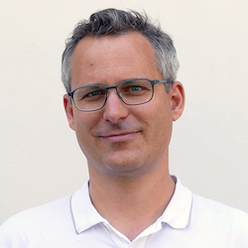
Bernhard Haslhofer, Cryptoasset Analytics & Blockchain Forensics Researcher
I lead the Digital Currency Ecosystems research group at the Complexity Science Hub in Vienna. My research develops computational methods for cryptoasset analytics and decentralized finance, digital crime and forensics, and large-scale disinformation.
I co-founded Iknaio Cryptoasset Analytics and serve as a court-certified expert in IT and cryptoasset forensics. I also teach courses on these topics at TU Wien.
Research Interests
Impact
Recent News
Oct 2026
The call for papers for the 6th Cryptoasset Analytics Workshop (CAAW 2027) is open. The workshop is co-located with Financial Cryptography and Data Security 2027 in Barbados on February 12, 2027. The submission deadline is November 20, 2026.
Oct 2026
I spoke on "Die offenen Flanken der Kryptoforensik: Von heuristischem Clustering zur agentischen KI" at the IT-Strafrechtstag 2026 at the University of Bayreuth.
Oct 2026
I gave a talk on the open flanks of crypto forensics, from heuristic address clustering to agentic AI, at the German nationwide meeting of the IuK and cybercrime prosecution units in Bamberg.
Sep 2026
At the INTERPOL New Technologies Forum in Vienna, I presented our findings on how reliable Bitcoin address clustering is in law enforcement contexts. Clustering is useful for generating leads, but it should not be used as evidence on its own.
Sep 2026
I presented our work on stablecoins under stress in a national economy at the ESMA Research Conference 2026 in Paris.
Sep 2026
Together with Thomas Goger from the Bavarian Central Office for the Prosecution of Cybercrime, I presented "Operation Alice: Investigations as Code at the scale of 373,000 dark web sites" at the 10th Global Conference on Criminal Finances and Cryptoassets in Luxembourg.
Sep 2026
We are hosting this year's INTERPOL New Technologies Forum (NTF) at the Complexity Science Hub on September 29-30.
Sep 2026
I gave a talk on making crypto investigations in cybercrime more efficient, from manual tracing to scalable investigations, at IECTIC 2026 in Kassel.
Aug 2026
We are organizing a breakout session on advancing interoperable blockchain intelligence at the 10th Global Conference on Criminal Finances and Cryptoassets in Luxembourg on September 15.
Jul 2026
New pre-print: Stablecoins under Stress in a National Economy: Transaction-Level Evidence from Austrian Crypto-Asset Service Providers is now available on arXiv.
Jul 2026
New pre-print: How Reliable Is the Multi-Input Heuristic for Bitcoin Address Clustering in Law Enforcement Contexts? is now available on arXiv.
Jun 2026
New pre-print: Tracing Stablecoin Contagion during the USDC Depeg after the Silicon Valley Bank Collapse is now available on arXiv.
Jun 2026
We are hosting the upcoming 15th Illicit Networks Workshop at the Complexity Science Hub on June 29-30.
May 2026
I gave an invited talk on "The Privatization of Money: A Decade of Crypto, from Cypherpunk Utopia to Stablecoin Reality" at the Weizenbaum Institute in Berlin.
May 2026
New pre-print: DeFi Yield Aggregators: Analysing Investment Strategies and Structural Dependencies is now available on arXiv.
May 2026
New pre-print: Modern Portfolio Theory in the Crypto-Wilderness is now available on arXiv.
May 2026
I am co-organizing this year's Frontiers in DeFi workshop at the Einstein Center Berlin.